From Stalled to Shipping: 2025 at haddock
Management
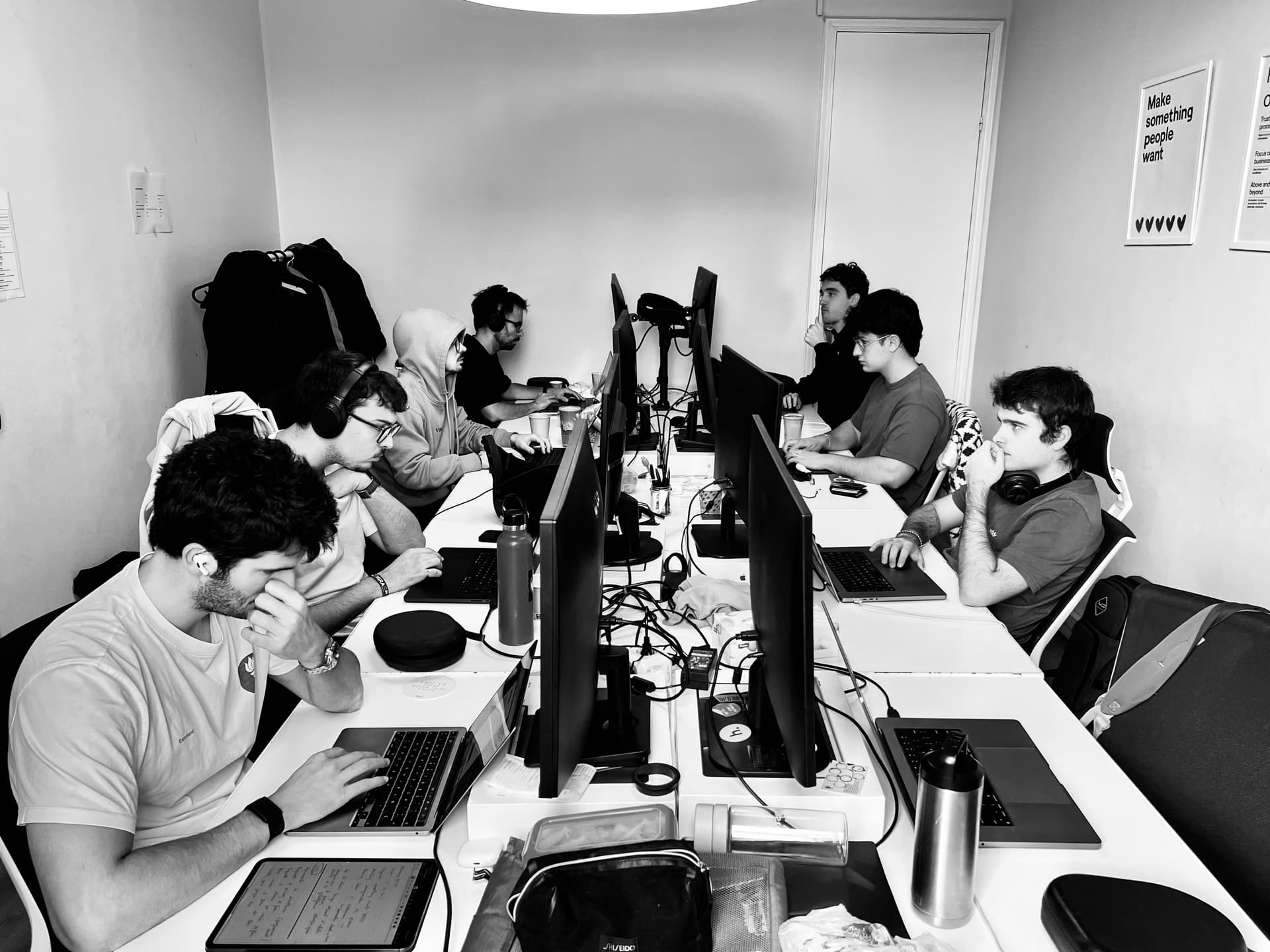
When I joined haddock as leader of the engineering team in February 2025, I walked into a company with incredible potential but an engine that had stalled.
How the year started
We had product-market fit and an efficient sales process. That was the dream scenario I was looking for: a business that worked, so I could focus on Engineering strategy and execution.
But the product wasn’t matching expectations. haddock is a “Point of Control” for restaurants, but our customers didn’t feel in control. Invoice digitization was flaky, price tracking was often incorrect, and there were large parts of the product that were technically functional, but missed the critical usability details that customers actually needed to rely on them.
Worse, the engineering team seemed stuck. In 2024, they had gone from extreme bureaucracy to total improvisation, but the result was the same: execution was slow. Projects were dragging for months, quality suffered, and frustration was growing.
Strategy for 2025
My strategy was to turn things around with a single, clear idea:
Move fast, and ship with good enough quality.
As simple as that.
What is fast? Shipping value every week. Deploying multiple times per day. Embracing lean development.
What is good enough quality? That the product is sufficiently reliable that we aren’t losing customers to bugs and product defects. For this, we measured churn and watched trends in churn reasons.
We had a huge opportunity to capitalize on our market fit, but we had to earn it. We needed to stabilize the core (digitization), finish those half-baked MVPs to make them truly useful, and expand to larger customers. And we needed to do it iteratively, learning at every step.
Why this is personal to me
Back in 2022, I left my previous role at Splash frustrated by friction, experienced as misalignment between departments, slow approvals, technical debt, and long planning cycles.
I became a freelancer and built startups as a solo engineer (After, Avocaty). In that context, I rediscovered the joy of building:
Full ownership of execution and stack.
Shipping to production multiple times a day.
Keeping tech lean and replaceable.
Making decisions in minutes, not weeks.
When I came to haddock, I brought that specific mindset with me:
Work should feel as close as possible to being a technical founder on your own project.
Especially in a startup our size, serving small businesses without heavy compliance requirements, we have a superpower: speed. We have the freedom to try, fail, get up, and sprint again.
The Tactics: how we did it
Each of these deserves its own article, but here are the tactical shifts that unlocked our speed:
Building by use case, not by layer: we develop features end-to-end (vertical slices) to validate hypotheses quickly, rather than perfecting technical layers one by one. This broke the separation between "backend" and "frontend," and we started treating everyone as a general Product Engineer.
Chunking projects:
We broke large projects into discrete initiatives, and initiatives into small, deliverable milestones.
We enforced limits on the scope of each pull request.
We adopted feature flags to merge early and often, and release when ready.
Design System adoption: we chose an open-source library and started treating UI components like plug-and-play Lego pieces, allowing us to build interfaces instantly and discard overcomplicated custom designs.
The Defender 🛡️: a rotating role shielding against bugs and interruptions.
Hiring for speed: we chose engineers who are fast-paced and clear communicators.
Learning from the best: we talked with startups that ship blazingly fast.
“Focus on Business”: one of haddock’s core values, helped us in everyday decisions. If it doesn't move the needle for the customer, it's a distraction.
One-week cycles: we stick to short feedback loops.
No daily standups: during a retrospective, we realized that daily syncs were just overhead for us. Following LangFuse’s lead, we dropped them and trusted the team to own their initiatives.
The role of AI
Process improvements got us running. But AI is what made us fly.
We didn't just integrate AI into our product with massive impact. We added it as a first class tool in our development workflow. We heavily challenged ourselves and the entire organization to become AI-native, and as a result, we use AI models extensively, mostly through Cursor. The impact has been transformative across the entire lifecycle:
Code Production: we write both boilerplate and core logic at speeds that were unimaginable a year ago.
Debugging: we often identify the root cause of defects almost instantly from bug reports and network request payloads.
Architecture: we don't just code; we plan. We use AI to challenge our architectural ideas and refine our approaches before implementation.
This velocity is what allowed us to tackle complex challenges without doubling the team size. With guidance and examples to follow, we’ve been able to ramp up new engineers unbelievably fast, even if they didn’t have previous TypeScript experience or weren’t familiar with Clean Architecture.
Our mission
We wholeheartedly believe that haddock helps restaurants be more successful. We want to grow this business not only because we think we can do it, but to unlock even more value for the restaurant owners and teams who rely on us.
On top of our engineering shift, the rest of haddock has been doing a tremendous job at retaining customers, expanding accounts, and selling to targets that seemed impossible 9 months ago! This new momentum, driven by our founders' clarity and ambition, has created an environment where high-speed engineering can truly shine.
With 2026 around the corner, we are already making ambitious plans. Stay tuned to Arnau’s LinkedIn for updates, and check haddock’s careers page if you want to come aboard.